How to Dice an Onion Fast: Even Pieces, Fewer Tears
This article contains affiliate links. If you buy through them, we may earn a commission at no extra cost to you.
Diced onion goes into salsa, burgers, chili, beans, slaw and half the sides on a barbecue menu, so it's worth learning a method that is fast and gives even pieces. The classic chef's technique uses the onion's own layers and root end to do most of the work: a few cuts in one direction, a few in the other, and the dice falls off the blade. Here is how it works and where people usually go wrong.
Why the root end matters
An onion is a stack of rings held together at the root. If you leave the root attached while you cut, the layers stay in place like the pages of a bound book, and you can slice through them without the onion falling apart. Cut the root off first and you're chasing loose slivers across the board. Trim the stem (pointed) end, but always leave the root.
Step by step: the classic dice
- Halve through the root. Set the onion on its side and cut straight down from stem to root, splitting the root in two. Each half now has a piece of root holding it together.
- Trim and peel. Slice off the stem end of each half. Peel back the papery skin and the first layer if it's dry or blemished, leaving it hanging from the root if that's easier, then pull it away.
- Lay it flat. Place each half cut side down. A flat base is what keeps the next cuts safe.
- Make the vertical cuts. With the root pointing away from you, slice down lengthwise from just in front of the root toward you, keeping the tip of the knife about a quarter inch short of the root so the layers stay joined. Space the cuts as far apart as you want your dice to be: about 1/4 inch for a fine dice, 1/2 inch for a medium dice.
- Decide on the horizontal cuts. Many cooks skip these. The natural curve of the layers already does the job, and the horizontal cut is where most knife slips happen. If you want very even small pieces, make one or two horizontal cuts toward the root, palm flat on top of the onion, fingers raised away from the blade.
- Cross-cut. Curl the fingers of your guiding hand into a claw, knuckles against the side of the blade, and slice across the vertical cuts, moving your hand back a little after each stroke. Diced onion falls away with each slice.
- Finish the root. When you reach the root, stand the last chunk on its flat side and chop what's left, or save it for stock.
A faster variation: radial cuts
Instead of vertical cuts straight down, angle each cut so it points toward the center of the onion, as if you were cutting slices of a pie. This follows the shape of the layers and gives more uniform pieces without any horizontal cuts at all. It takes a little practice to aim, but once it clicks it's the quickest home method.
Speed comes from rhythm, not force
- Let the blade do the work. Use a forward-and-down slicing motion rather than pressing straight down. A sharp edge glides through; a dull one crushes the layers and squeezes out juice.
- Keep the tip on the board for the cross-cuts and rock the knife through, feeding the onion under it with your claw hand.
- Don't rush the claw. Speed comes naturally after a few dozen onions. Going fast before your guiding hand is consistent is how fingertips get nicked. Our knife safety habits apply here more than anywhere.
- Scrape with the spine. Move diced onion off the board with the back of the blade, not the edge. Dragging the edge sideways dulls it quickly.
Fewer tears
Cutting an onion releases sulfur compounds into the air, and the more cells you crush, the more you release. A few practical ways to cut down on stinging eyes:
- Use a sharp knife. Clean slicing crushes fewer cells than a dull blade.
- Chill onions in the fridge for 30 minutes before cutting.
- Work quickly and move the diced onion into a covered container as you go.
- Cut near a fan, open window or range hood that pulls air away from you.
Common mistakes
- Cutting off the root first. The onion falls apart and you lose all control.
- Cutting through the root on the vertical cuts. Same problem, just later. Stop short.
- Working on a rolling, round onion. Always get a flat side down before cutting.
- Uneven spacing. Mixed sizes cook unevenly: small bits burn while big ones stay crunchy.
- Using a small paring knife. A short blade can't reach across a large onion half, so you saw back and forth. An 8-inch chef's knife handles most onions in single strokes.
Picking a knife for onion work
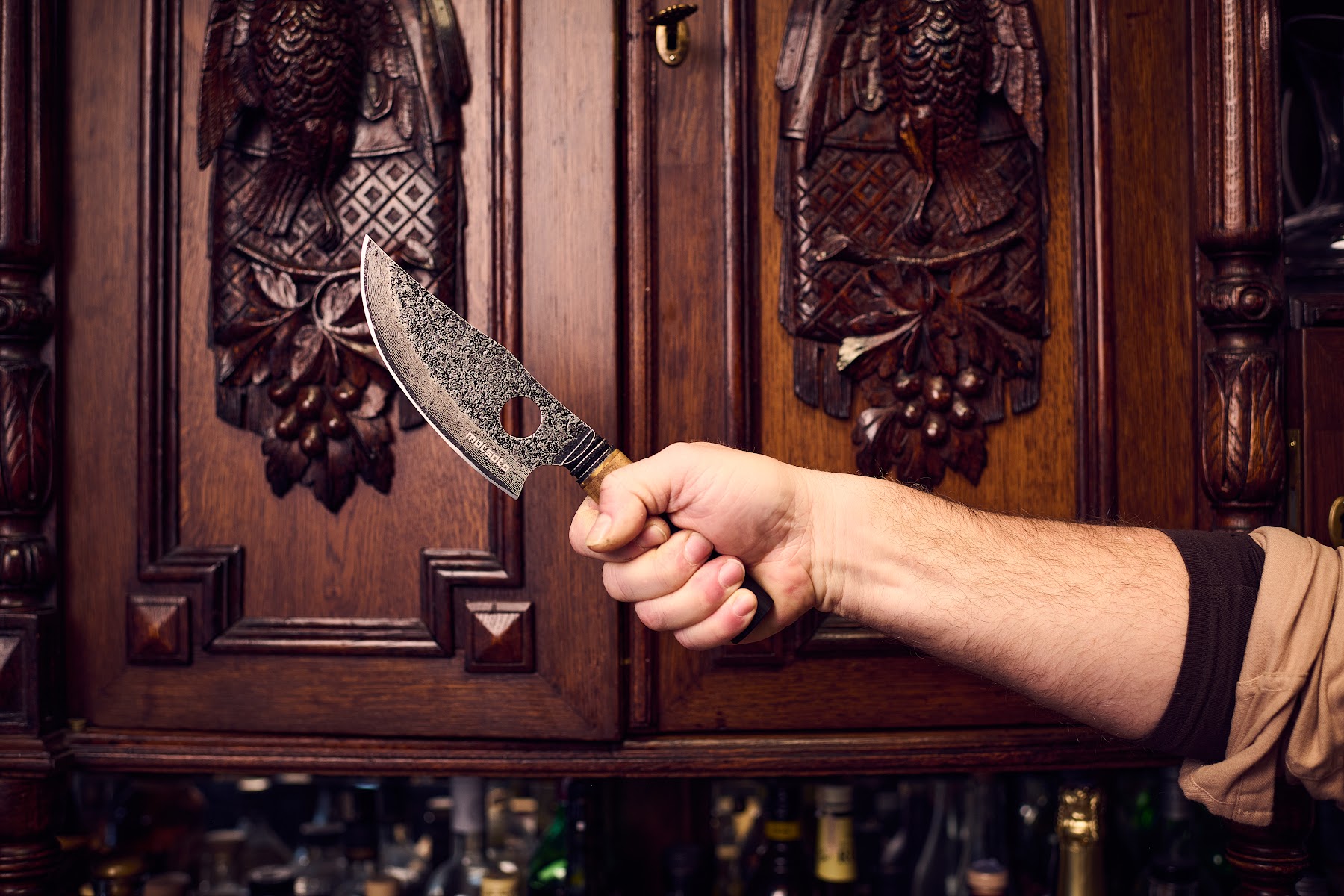
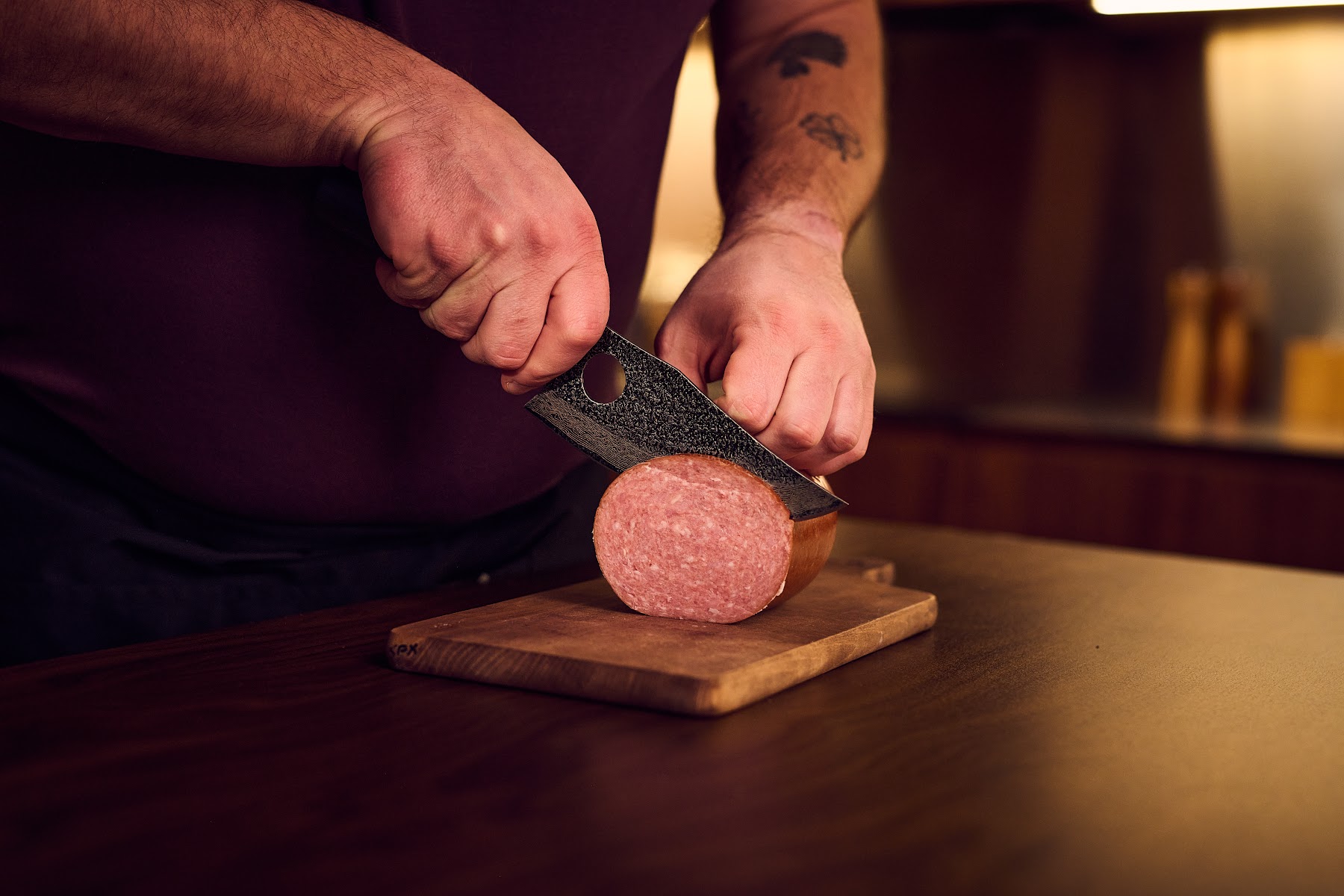
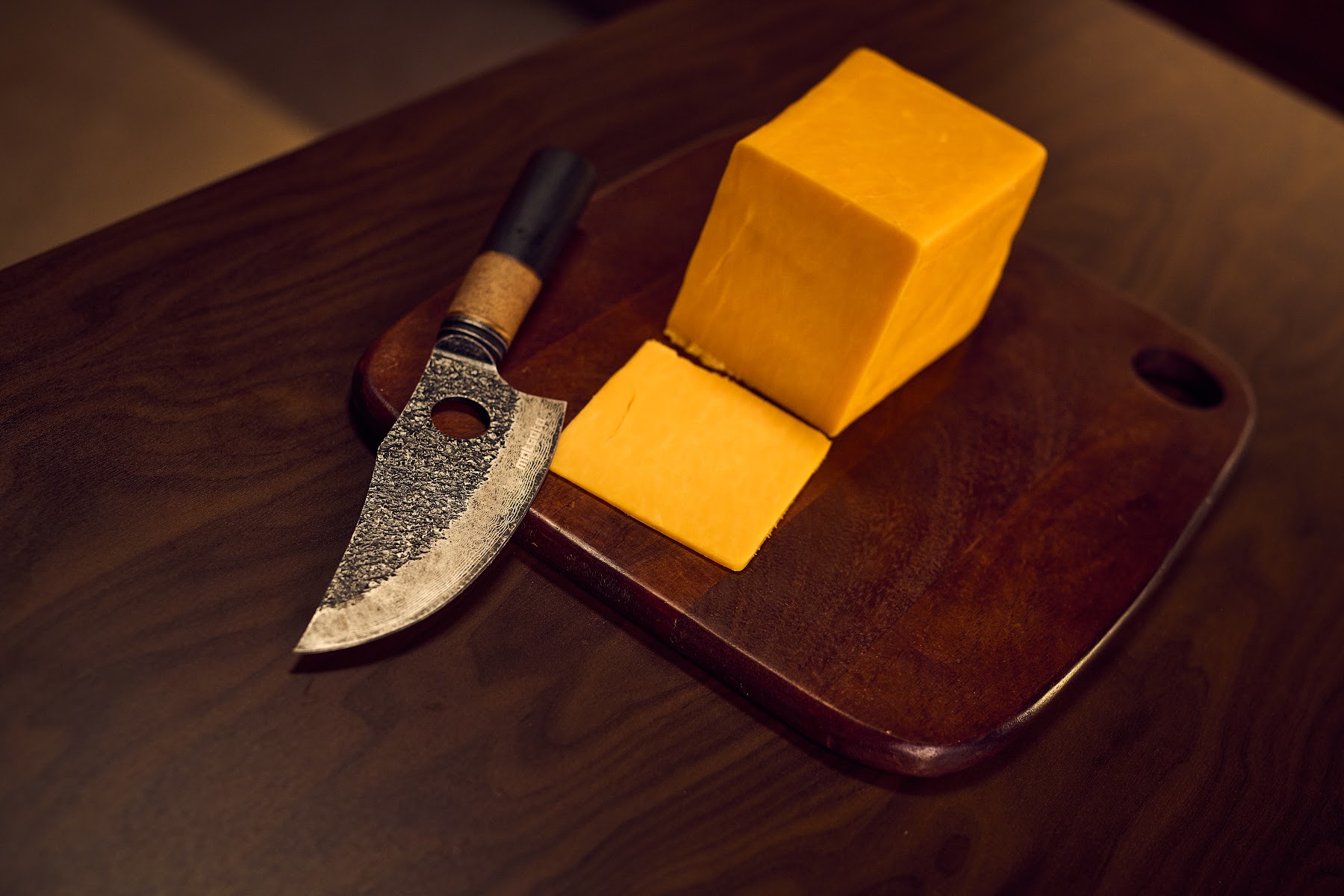
A chef's knife with a gently curved belly suits this job because it rocks smoothly through the cross-cuts. Grip matters too: onion juice makes handles slick, and a secure hold lets you keep the claw rhythm going. Some cooks like a finger-hole design that locks the index finger in place, which keeps the blade steady during repetitive cuts.
Dicing onions in volume
If you're prepping for a cookout, a catering job or a food truck shift, a few habits make a big batch go faster:
- Peel everything first. Halve and peel the whole bag before you dice a single one. Doing one task at a time is faster than switching back and forth.
- Keep a scrap bowl beside the board for skins and roots so your work area stays clear.
- Hone the edge every few onions. Onion is soft, but a big batch still rolls the edge over; see honing vs. sharpening.
- Store diced onion covered and cold, labeled with the prep date. In a commercial kitchen, follow your kitchen's procedures and your local health department's requirements for holding prepped produce.
- Wipe the board between batches so juice doesn't pool and make onions slide.
Practice plan
Dice one onion a day for a week using the steps above, focusing on even spacing rather than speed. By the end, the claw grip and stop-short vertical cuts will feel automatic, and the time per onion will drop on its own.
Want a chef's knife with a secure finger-hole grip for everyday prep like this? Read our chef knife guide.