Knife Skills for Barbecue: Trimming, Slicing and Carving Like a Pitmaster
This article contains affiliate links. If you buy through them, we may earn a commission at no extra cost to you.
Great barbecue is decided twice: once over the fire and once on the cutting board. A ragged slice or a strip of unrendered fat can undo hours of work. These techniques will make your cooks look as good as they taste.
Before the cook: trimming
- Work cold. Trim meat straight from the fridge. Cold fat is firm and cuts cleanly; warm fat smears.
- Remove silver skin. Slide the tip of your knife under the shiny membrane, angle the blade slightly upward, and pull the membrane taut with your other hand as you cut.
- Shape for even cooking. Trim thin edges that would burn and round off hard corners so heat and smoke reach evenly.
- Leave some fat. On brisket and pork shoulder, a thin fat cap protects the meat. Thick, hard fat that won't render is what to take off.
After the cook: let it rest
Resting lets juices settle back into the meat. Steaks and chops need a few minutes; large smoked cuts benefit from a longer rest, loosely covered. Cutting too soon floods your board and dries out the slices.
Slicing against the grain
Look for the long muscle fibers running through the meat and cut across them, not along them. Short fibers mean tender bites. On cuts like brisket, the grain changes direction between sections, so check again as you go.
Long strokes, not sawing
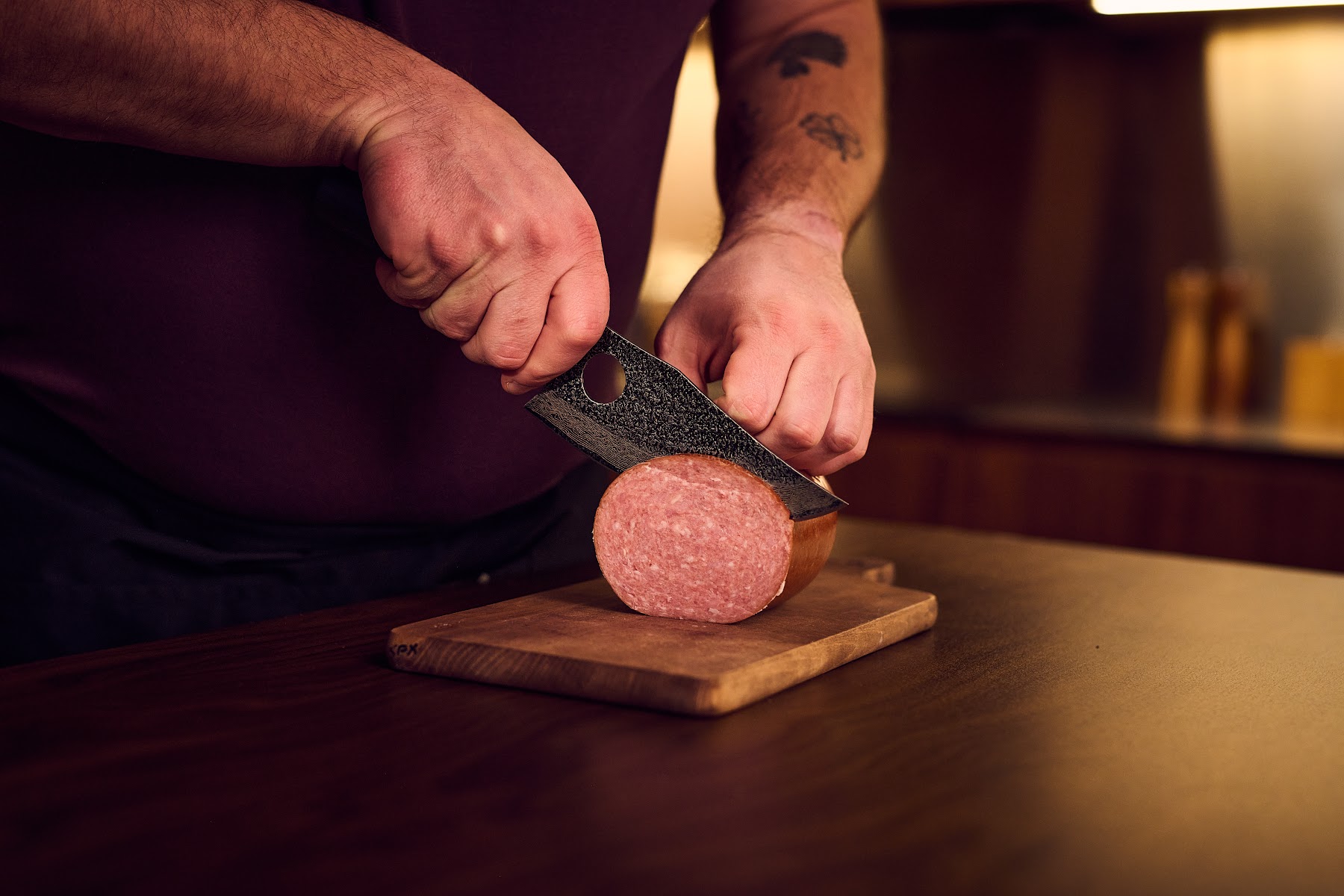
Use the full length of the blade in one smooth stroke. Sawing back and forth tears the bark and compresses the meat. A sharp knife and a light touch do the job.
Which knife for which job
- Trimming and portioning: a sturdy chef's knife with good grip and control.
- Steaks, sausage, chicken and pork: the same chef's knife works well.
- Whole briskets and large roasts: many pitmasters add a long, thin slicing knife for very long, even slices.
- Bones: use a heavy cleaver or cut around them, never through them with a chef's knife.
Board setup
Use a large wood or plastic board with a juice groove, and put a damp towel underneath so it can't slide. Keep separate boards for raw and cooked meat.
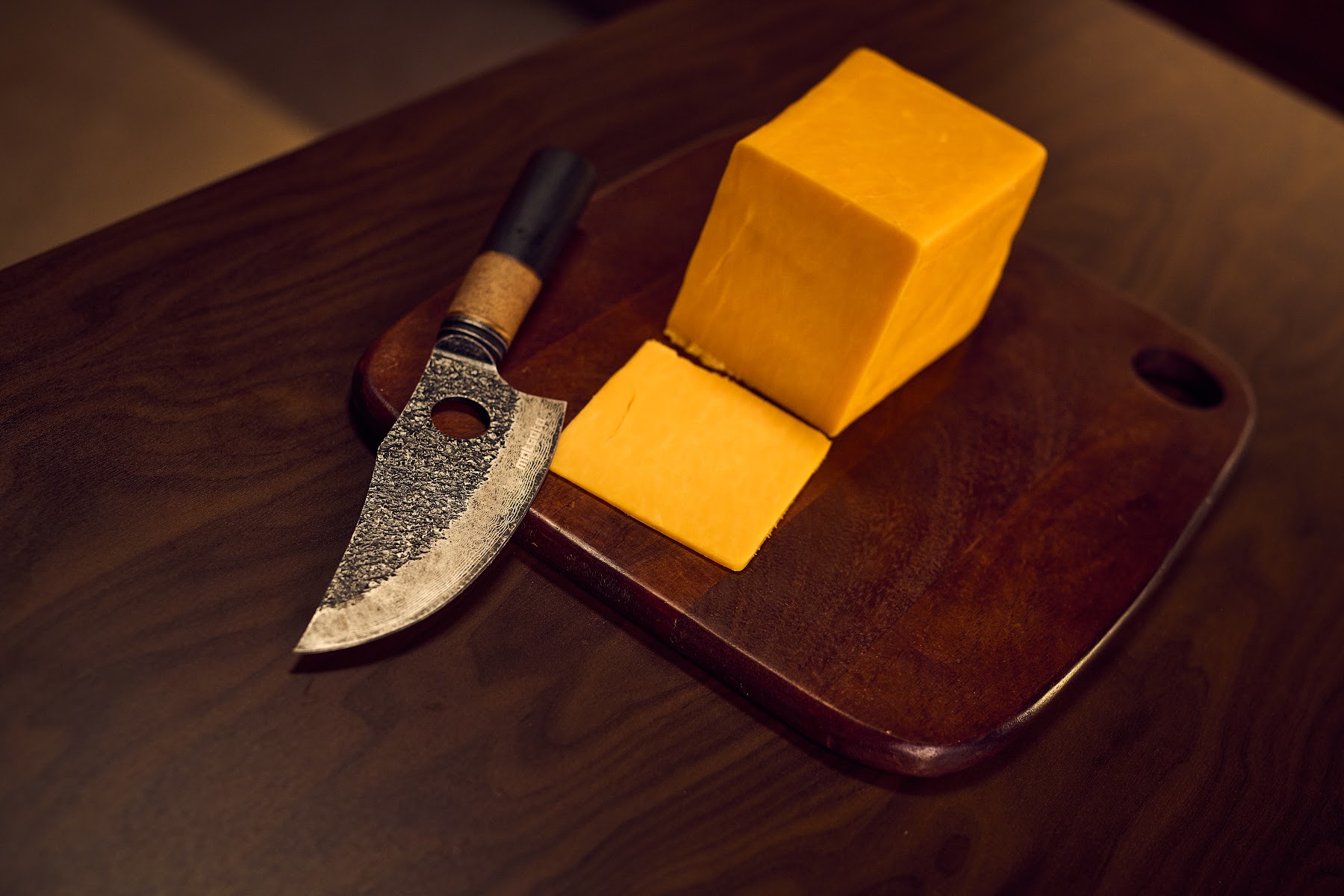
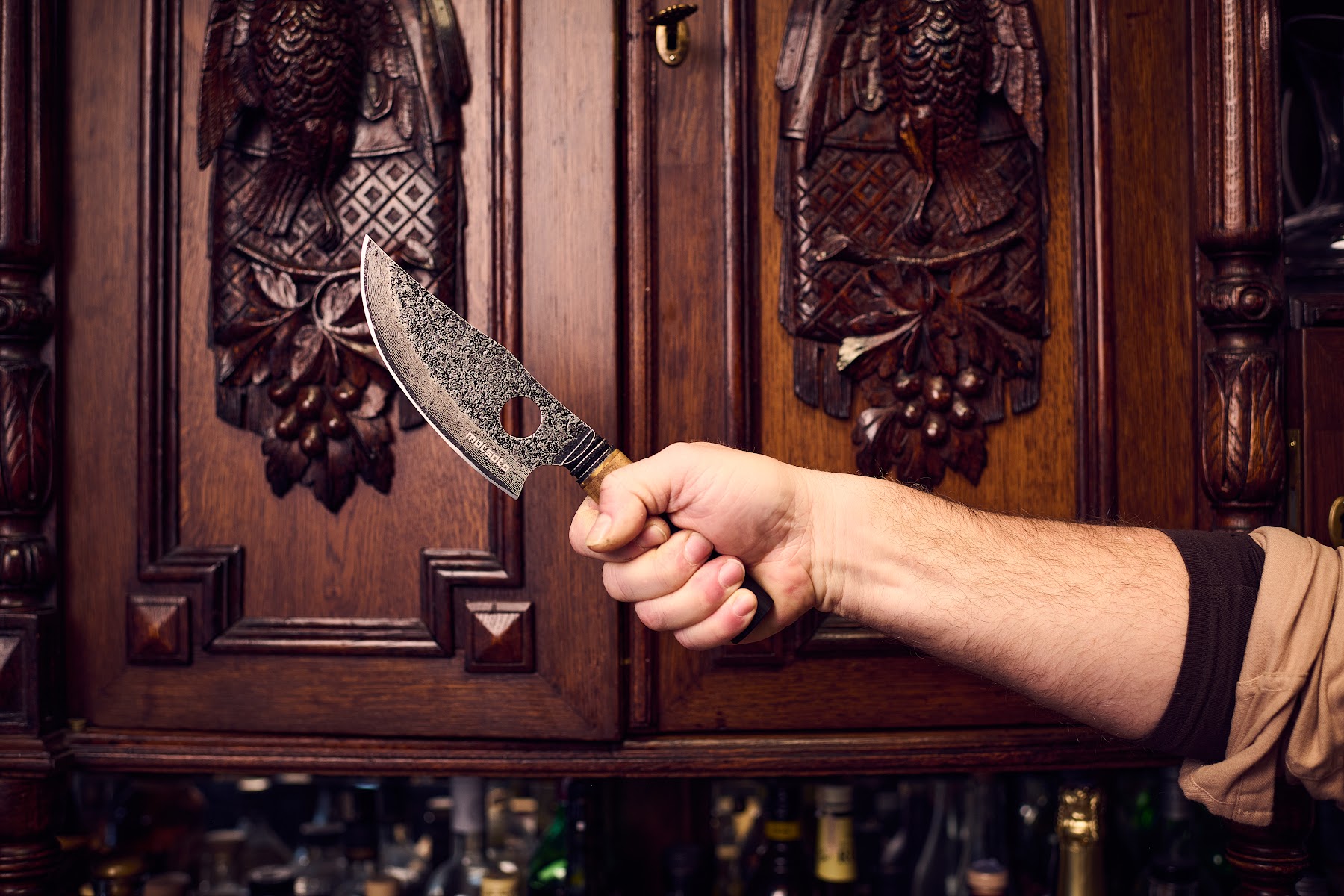
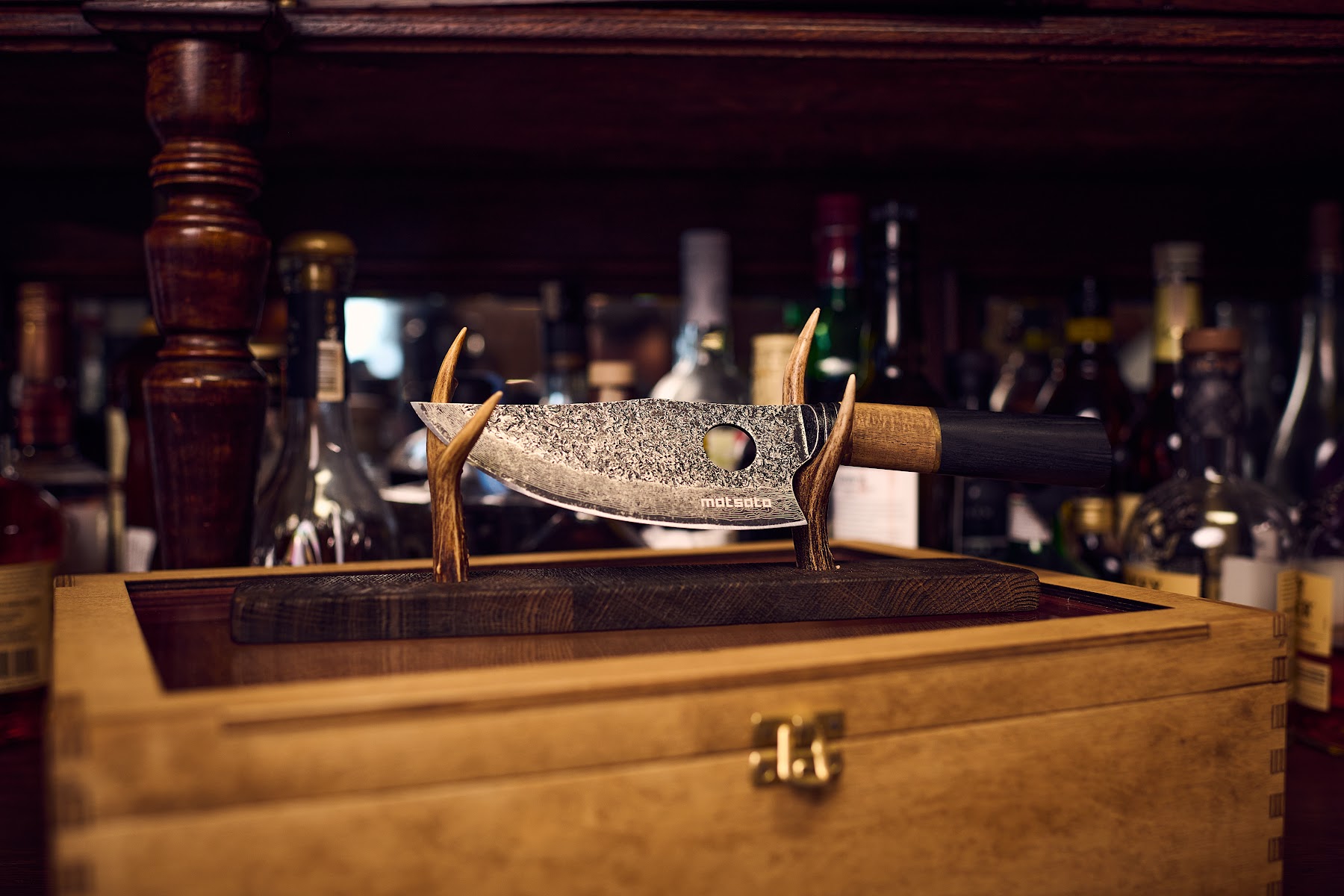
Want a knife that stays steady when your hands are greasy? See why grillers like the finger-hole chef knife.