How to Choose a Chef's Knife: 7 Things That Actually Matter
This article contains affiliate links. If you buy through them, we may earn a commission at no extra cost to you.
A good chef's knife does most of the work in a kitchen. It chops onions, slices meat, minces garlic and breaks down a chicken. Pick the right one and prep gets faster and safer. Pick the wrong one and it lives in a drawer. Here's what's worth paying attention to, and what isn't.
1. How you hold a knife
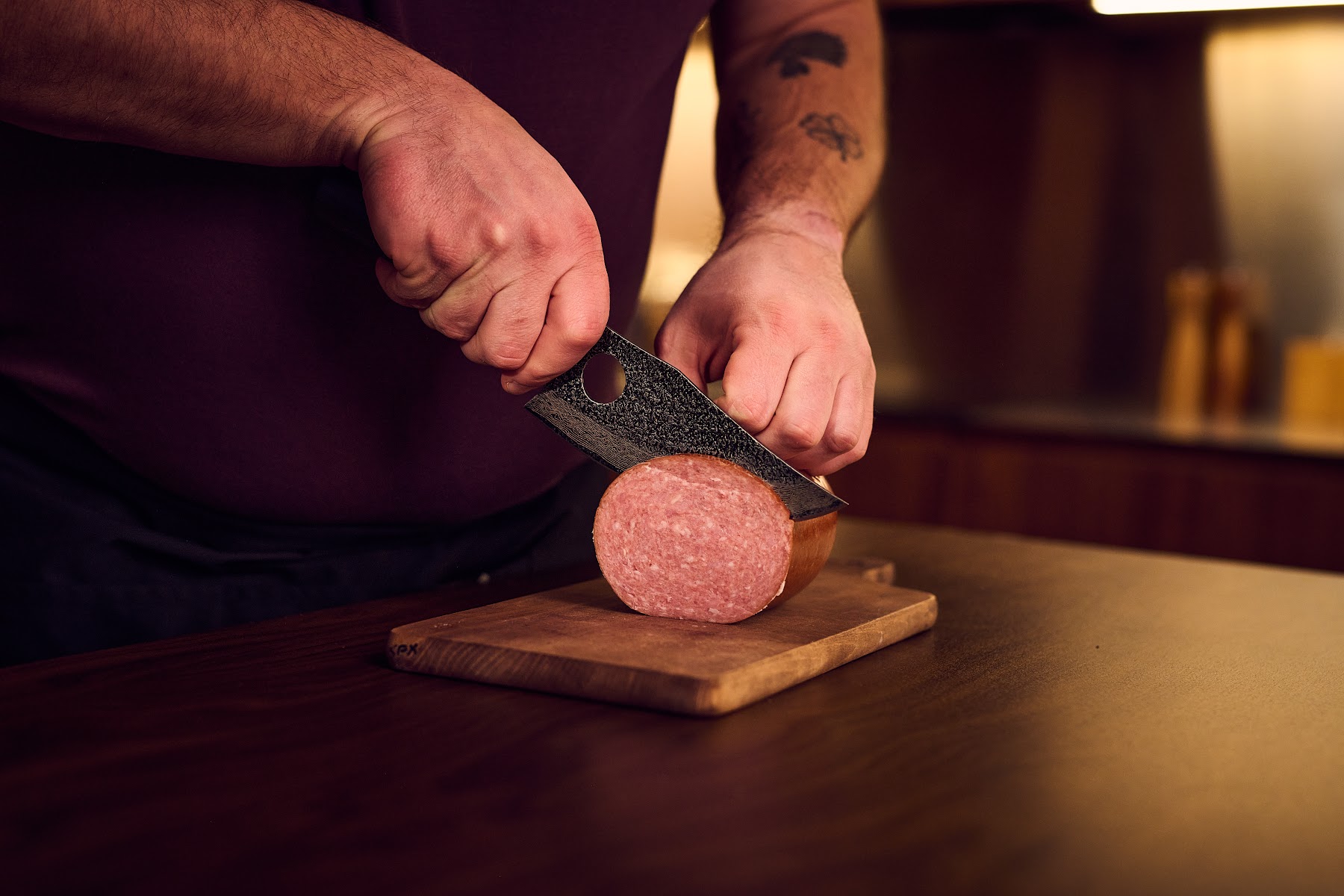
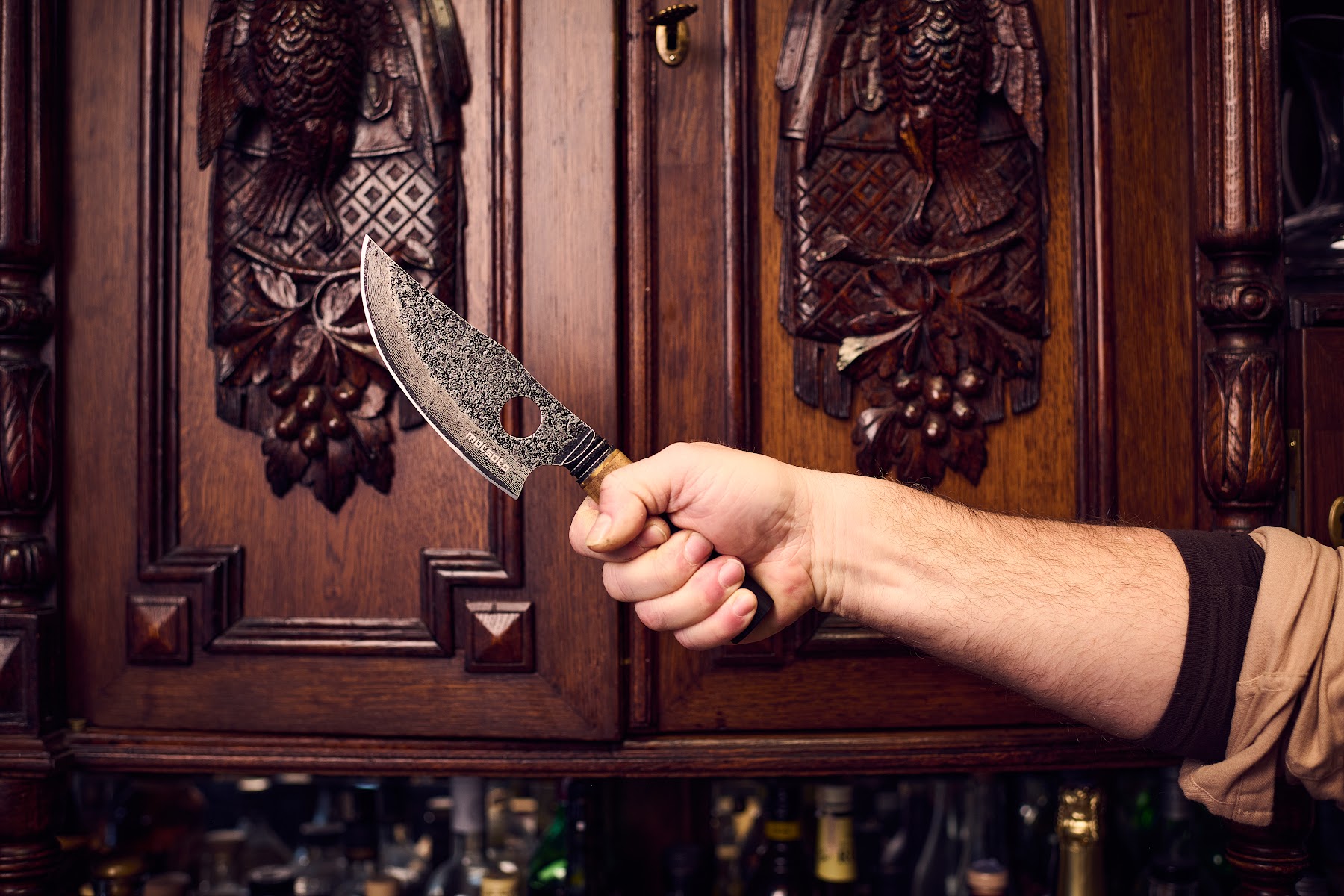
Most cooks use either a handle grip (all fingers on the handle) or a pinch grip (thumb and index finger pinching the blade just ahead of the handle). The pinch grip gives more control, but some people find it tiring. Knives with a finger hole near the spine are built around a third option: your index finger sits in the hole, which locks the blade in place and makes it hard for your hand to slide forward.
2. Blade shape
- Western chef's knife: a curved belly that suits a rocking motion for herbs and garlic.
- Santoku and Japanese-style blades: flatter, for push cuts and thin, even slices.
- Cleaver-style and hammered blades: taller and heavier, good for meat and dense vegetables.
If you mostly cook meat and vegetables for a family or a grill, a tall, slightly curved blade is a safe all-rounder.
3. Steel
Stainless steel resists rust and is easy to care for. Carbon steel can take a very fine edge but stains and needs drying right away. Many makers add heat treatment or cryogenic (sub-zero) treatment to make the steel harder and more wear-resistant, which can help an edge last longer between sharpenings.
4. Weight and balance
Hold the knife by the handle with one finger under the bolster, the point where blade meets handle. If it tips sharply toward the blade, it will feel heavy over long prep sessions. A balanced knife feels like an extension of your hand. Heavier knives power through squash and meat; lighter ones are quicker for fine work.
5. Handle material
Wood looks great and gives a warm grip but needs hand washing. Pakka wood (a resin-stabilized wood) and composites resist moisture better. Whatever the material, the handle should fill your hand without pressure points.
6. Length
An 8-inch (20 cm) blade is the classic size and handles almost every job. Smaller blades of 6 to 7 inches feel nimble in tight kitchens. Longer blades help with big roasts and watermelons but can feel unwieldy.
7. Care and guarantee
Plan to hand wash, dry and hone your knife. Before buying online, check the return window. A guarantee of 30 days or more gives you time to test the knife on real meals.
The bottom line
Choose for how you actually cook. If control and grip matter most, especially with meat, a knife with a finger-hole grip is worth a look. Read our full guide to the finger-hole chef knife to see if it fits your kitchen.