How to Break Down a Whole Chicken: 8 Pieces, Step by Step
This article contains affiliate links. If you buy through them, we may earn a commission at no extra cost to you.
A whole chicken usually costs less per pound than packaged parts, and breaking it down yourself gives you exactly the pieces you want plus a carcass for stock. The job takes about five minutes once you know where the joints are. The secret is that you rarely cut through bone: you find the joint, open it, and slice through the soft cartilage between the bones.
What you need
- A sharp chef's knife. A dull blade slips on wet skin and tears meat instead of cutting it. If your edge is struggling, see honing vs. sharpening first.
- A large cutting board with a damp towel underneath so it can't slide.
- Paper towels to pat the bird dry. Dry skin is far easier to grip.
- Kitchen shears (optional) for the backbone.
- A tray or bowl for finished pieces and another for the backbone and trimmings.
Step by step: eight pieces
- Set up. Take the chicken out of its packaging, remove anything in the cavity, and pat it dry. Place it breast side up with the legs pointing toward you.
- Remove the first leg. Pull one leg away from the body and slice through the skin between the thigh and the breast. Don't cut deep yet; you only want to expose the joint.
- Pop the hip joint. Grab the leg and bend it back firmly, away from the body, until the ball of the thigh bone pops out of its socket. You will feel and hear it.
- Free the leg. Turn the bird on its side and cut through the opened joint, keeping the blade close to the backbone. Feel for the small, rounded nugget of meat on the back near the thigh (the "oyster") and scoop it out with the knife tip so it stays attached to the thigh. Repeat on the other side.
- Split each leg. Lay the leg skin side down. You will see a thin line of fat where the drumstick meets the thigh. Cut along that line; if you hit bone, move the blade slightly and try again until it slides through the joint.
- Remove the wings. Pull a wing away from the body, cut through the skin, and wiggle the wing to find the shoulder joint. Cut straight through it. Leave a little breast meat attached if you like meatier wings. Trim off the wing tips and save them for stock.
- Take off the backbone. Stand the body up on its neck end and cut down through the rib bones on both sides of the backbone. Shears make this easier and safer than a knife. Add the backbone to your stock pile.
- Split the breast. Place the breast skin side down and press firmly with the heel of your hand to crack the breastbone. Cut straight down the center to create two halves. For four breast pieces, cut each half in two crosswise.
Boneless breasts instead
If you want boneless breasts, skip steps 7 and 8. With the bird breast side up, find the ridge of the breastbone and make a shallow cut along one side of it. Keeping the blade angled toward the bone, use short, light strokes to peel the meat away from the rib cage while pulling the breast gently with your other hand. Work down to the wing joint and lift the breast free. Repeat on the other side, and pull off the small tenderloin underneath if you want to cook it separately.
Common mistakes
- Trying to cut through bone. A chef's knife is for joints and meat. Forcing it through thick bone can chip the edge. Find the joint or use shears.
- Cutting before dislocating. Bending each joint first shows you exactly where to cut. Skipping this step is how pieces end up with bone fragments.
- Leaving the oyster on the carcass. It's one of the tastiest bites on the bird. Check for it on each side before you remove the legs.
- Hacking with short, hard chops. Use smooth slicing strokes and let the edge do the work. Pressure belongs on the joint, not the blade.
- Working on a slippery board. Wet skin and a sliding board are a bad combination. Pat dry, anchor the board, and wipe your handle if it gets greasy. More habits that prevent slips are in our knife safety guide.
Grip and control
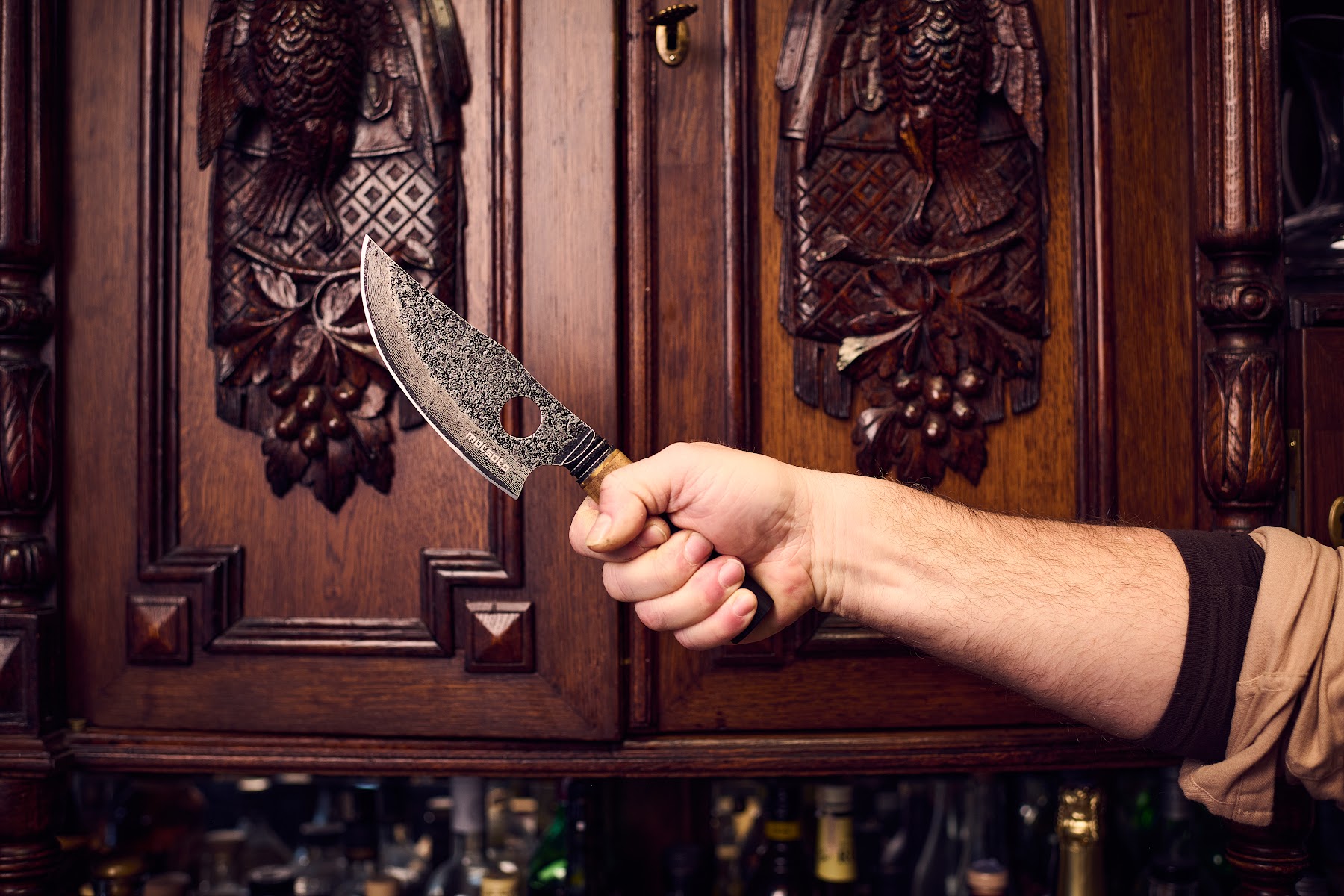
Most of this job happens with the knife tip near the bone, often at an angle, with greasy hands. A secure grip matters more here than raw sharpness. Choke up on the handle, keep your guiding hand behind the edge, and slow down around the joints.
Scaling up for cookouts and catering
If you're breaking down a case of birds for an event, set up a station rather than doing them one at a time:
- Batch each step. Remove all the legs, then all the wings, then split all the breasts. Repeating one motion is faster and more consistent.
- Keep pieces sorted in separate pans by cut so they cook evenly together.
- Keep everything cold. Pull a few birds from the cooler at a time instead of the whole case.
- Keep raw poultry separate. Use a dedicated board and knife, and clean and sanitize them, your hands and the work area when you finish.
- Follow the rules for your kitchen. Commercial kitchens and food trucks should follow their own procedures and their local health department's requirements for handling raw poultry.
Use the leftovers
The backbone, wing tips and trimmings make a good stock. Freeze them in a bag and add to it each time you break down a bird until you have enough for a pot.
Looking for a knife that stays steady when your hands are slick with chicken fat? See our finger-hole chef knife guide.